You’ve decided to start with canine fitness. Good.
Now comes the question every beginner asks: which equipment should I buy first?
The honest answer is that it depends less on the equipment than you think.
Start with your dog, not the equipment
Before you look at any product, look at your dog. Three things decide what makes sense:
- Fitness level: is your dog active and fit, or just starting out?
- Training goal: do you want body awareness, strength, preparation for a sport, or support for a senior dog?
- Skill level: has your dog ever worked on equipment, or is everything new?
The answers tell you where to begin. The equipment comes second.
Stable before unstable
The most common beginner mistake is starting with the most exciting equipment, usually something inflatable and unstable. It looks like training. But if your dog can’t yet hold a calm, balanced position on stable ground, an unstable surface doesn’t add a challenge. It adds compensation.
Start stable. Build clean positions. Add a reactive surface once your dog has control.
“I see it again and again: people buy equipment that’s too advanced for where their dog is. That’s not a lack of motivation, it’s a lack of information. The best first purchase is the one your dog can actually work with today.”
— Katharina Mattioli, Founder
Why DIY isn’t a shortcut
Sofa cushions, kitchen stools, a board on a box: many people start with what they already have at home. It’s understandable, but it has limits.
- Cushions compress unevenly and differently every time. Your dog can’t learn a consistent position on a surface that never behaves the same way twice.
- Stools and furniture are built for people. Height, edges and surface aren’t made for paws.
- Improvised setups can slip, tip or shift in ways you don’t control.
Equipment designed for dogs isn’t about looking professional. It’s about a surface that behaves predictably, so the only variable left is your dog.
[IMAGE: FlexBlox next to a sofa cushion or stool]
Shape matters more than you think
Two details beginners often overlook:
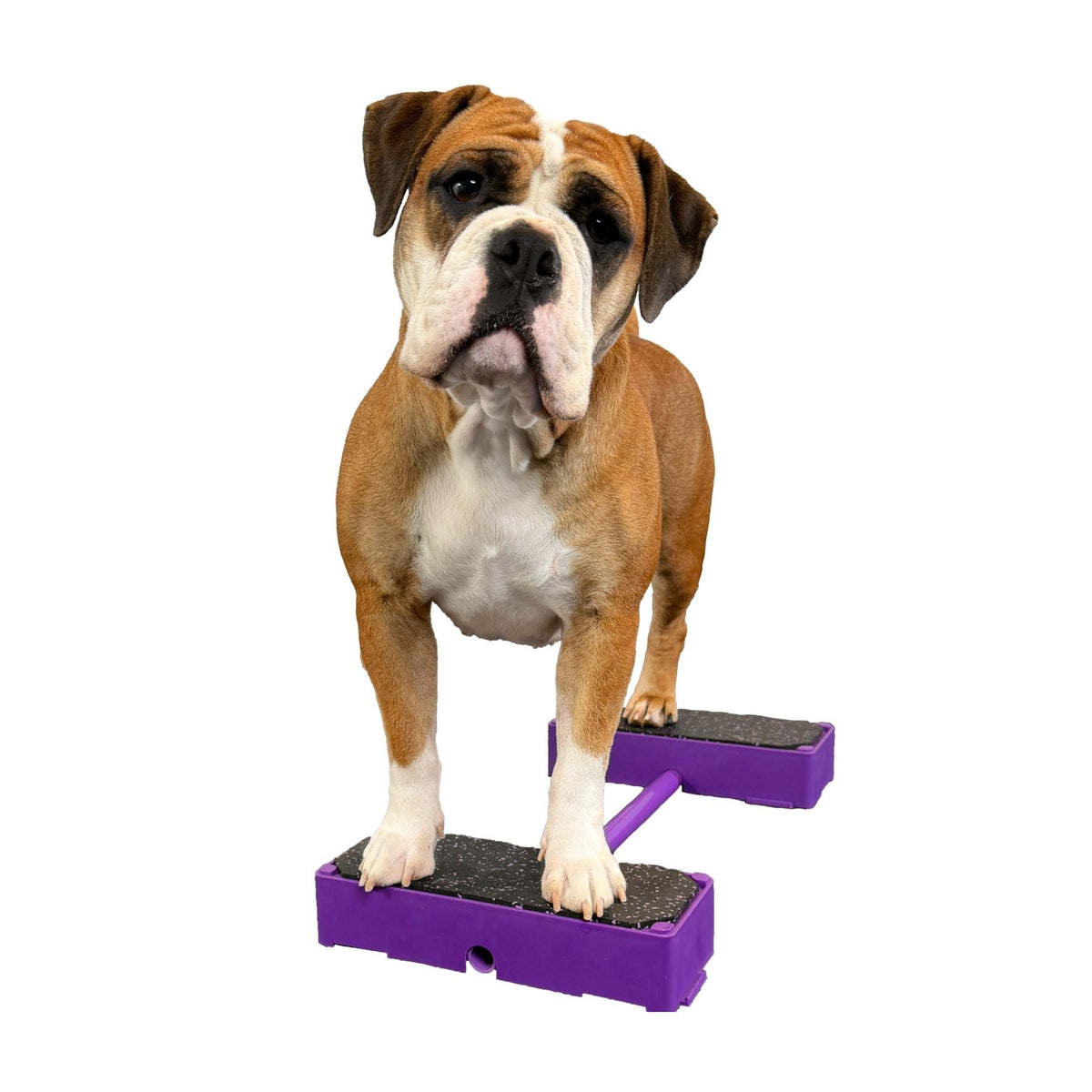
- Round surfaces for two or more paws aren’t ideal for working on a parallel, balanced stand. Square and rectangular surfaces make it easier for your dog to place its paws correctly.
- Two smaller pieces of equipment are often safer and more versatile than one large, very unstable one. They give you more setup options and more control.
A sensible first set
For most beginners, this is enough to start:
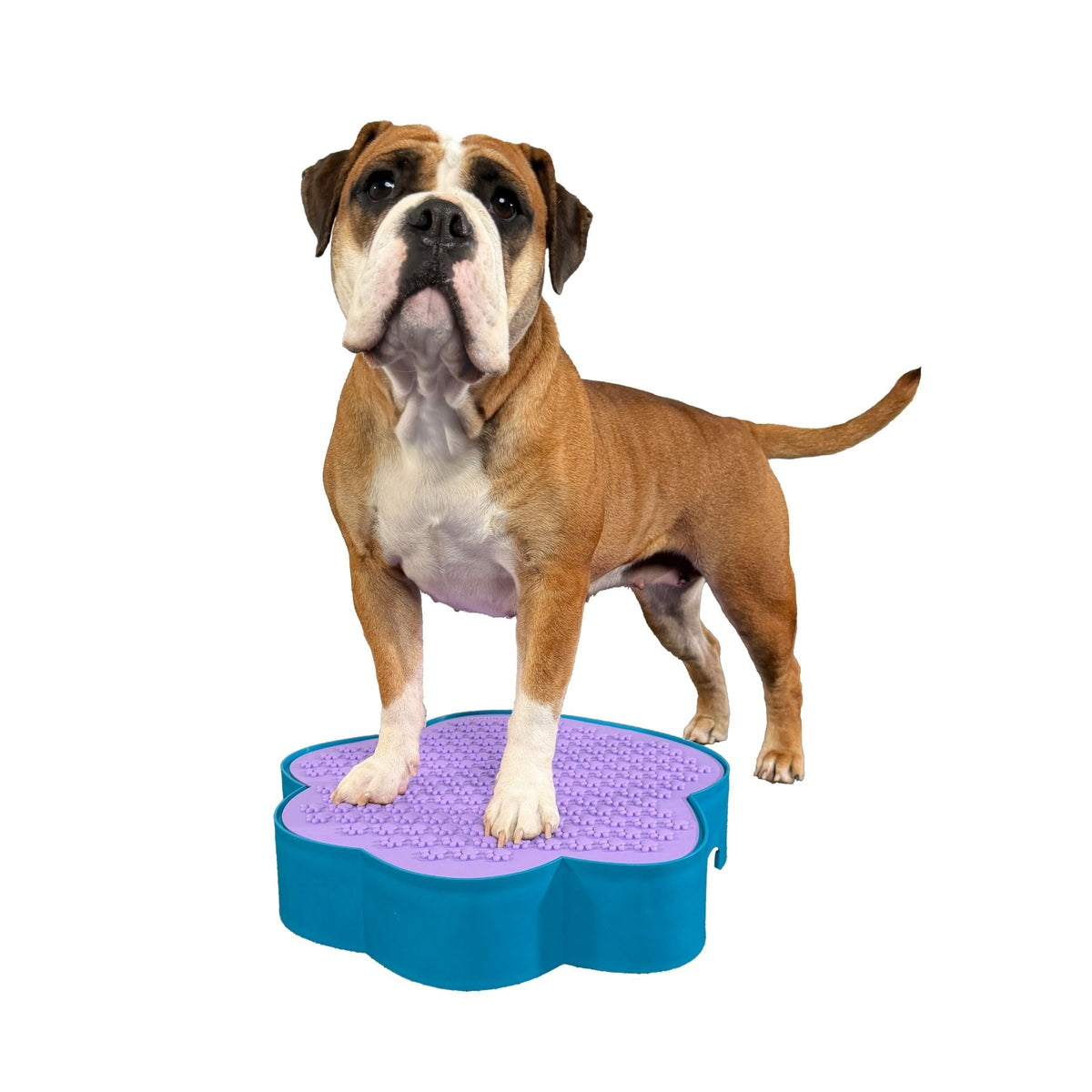
- One or two FlexBlox: the foundation for nearly all basic exercises, from 4 Up On 1 to Transitions
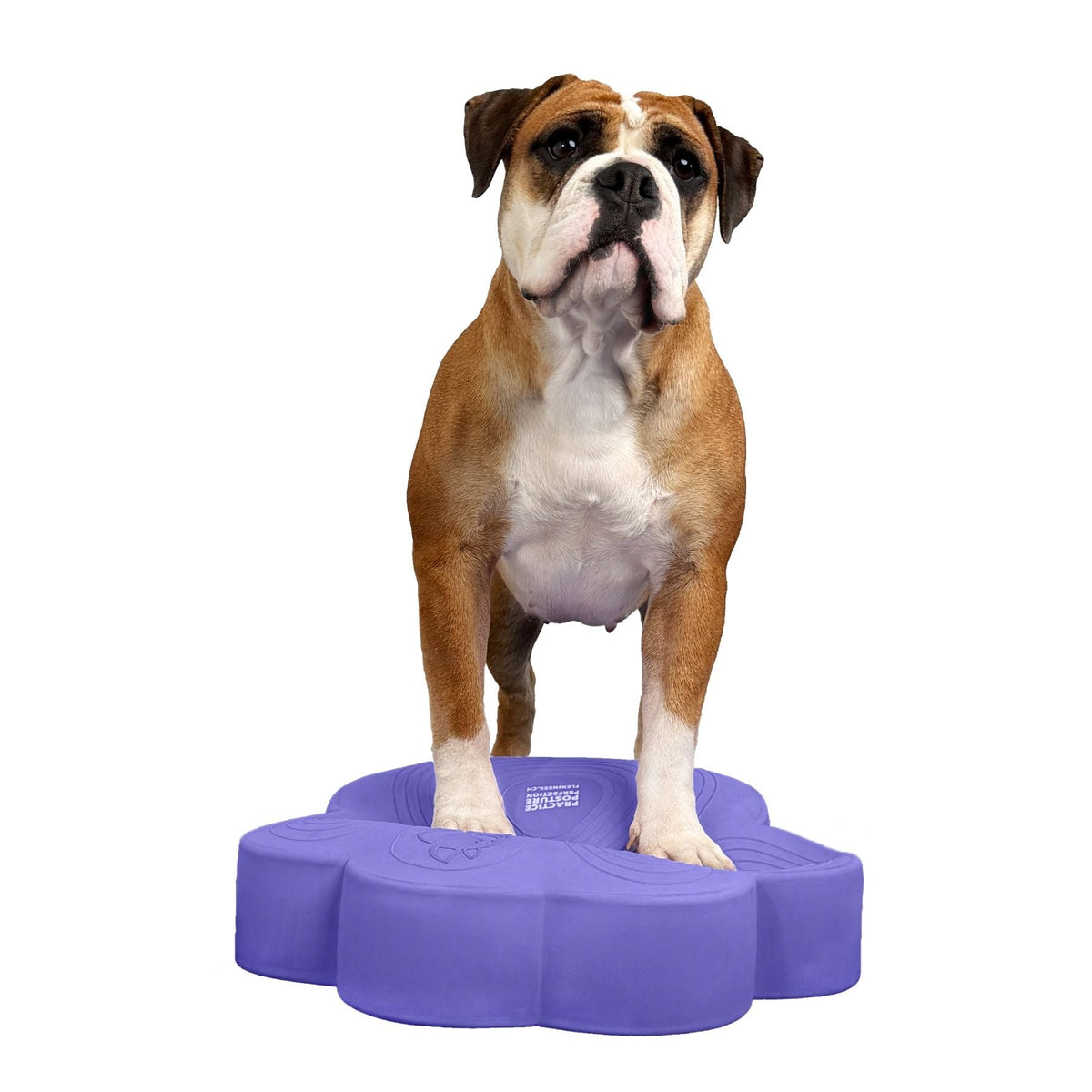
- A PawDisc: for Pivot and precise front-paw work
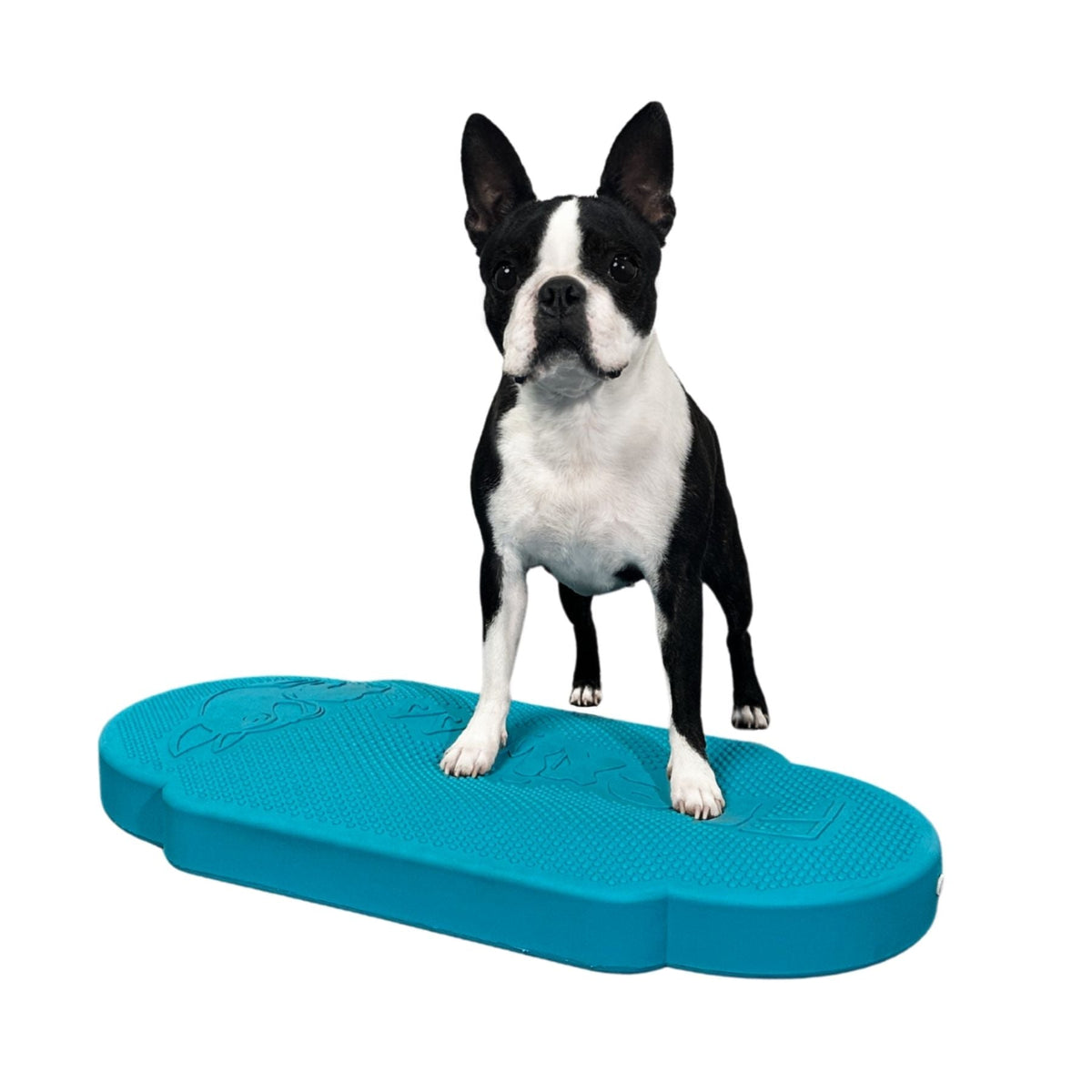
Next step: once your dog holds positions with control, a reactive surface such as the TwinDisc adds a new challenge.
[IMAGE: beginner set FlexBlox + PawDisc]
The bottom line
Your first equipment doesn’t need to be the most impressive. It needs to fit your dog, your goal and where you are right now. Start simple, start stable, and build from there.
Not sure what fits your dog? Write to us at contact@flexiness.shop.
Train smart with Flexiness®.