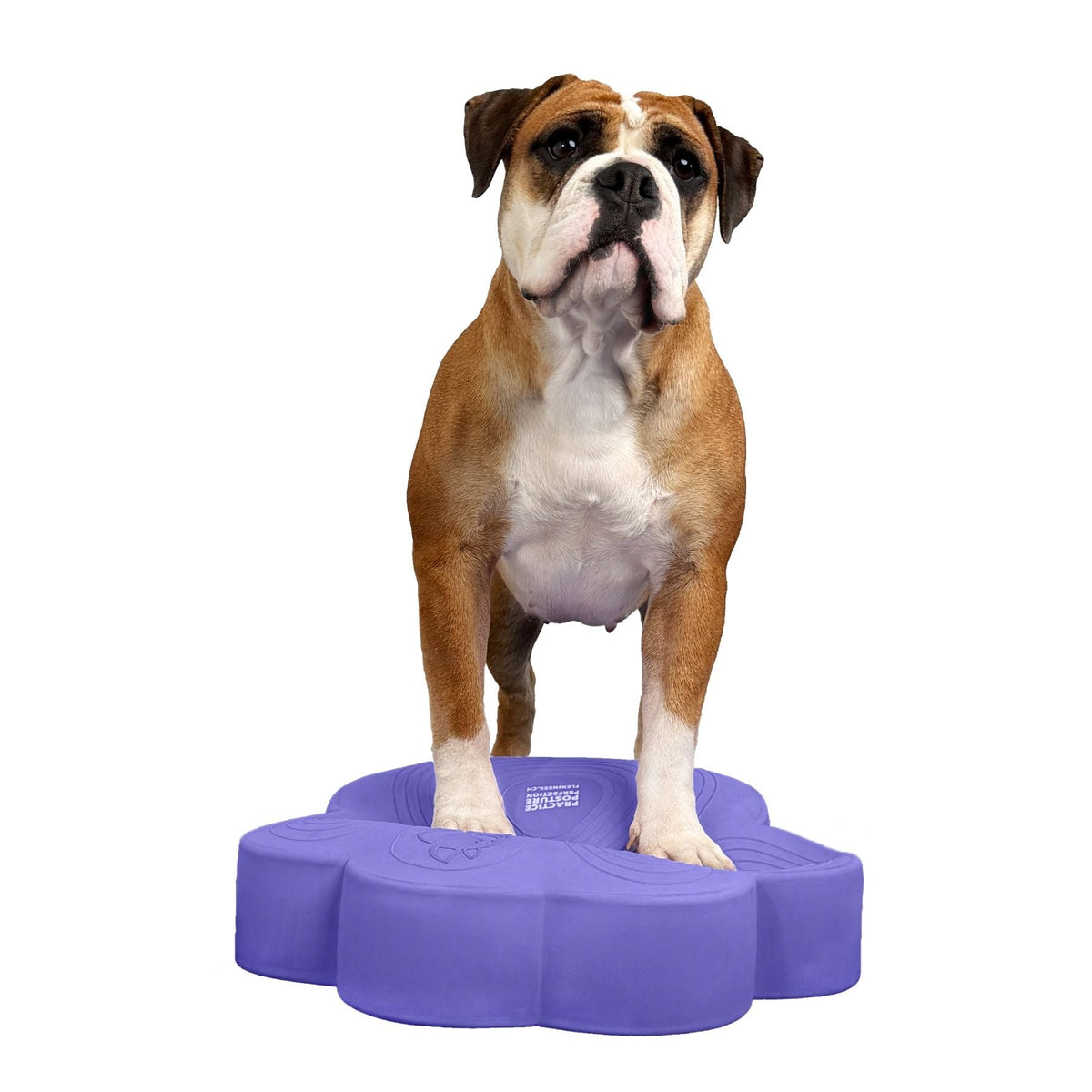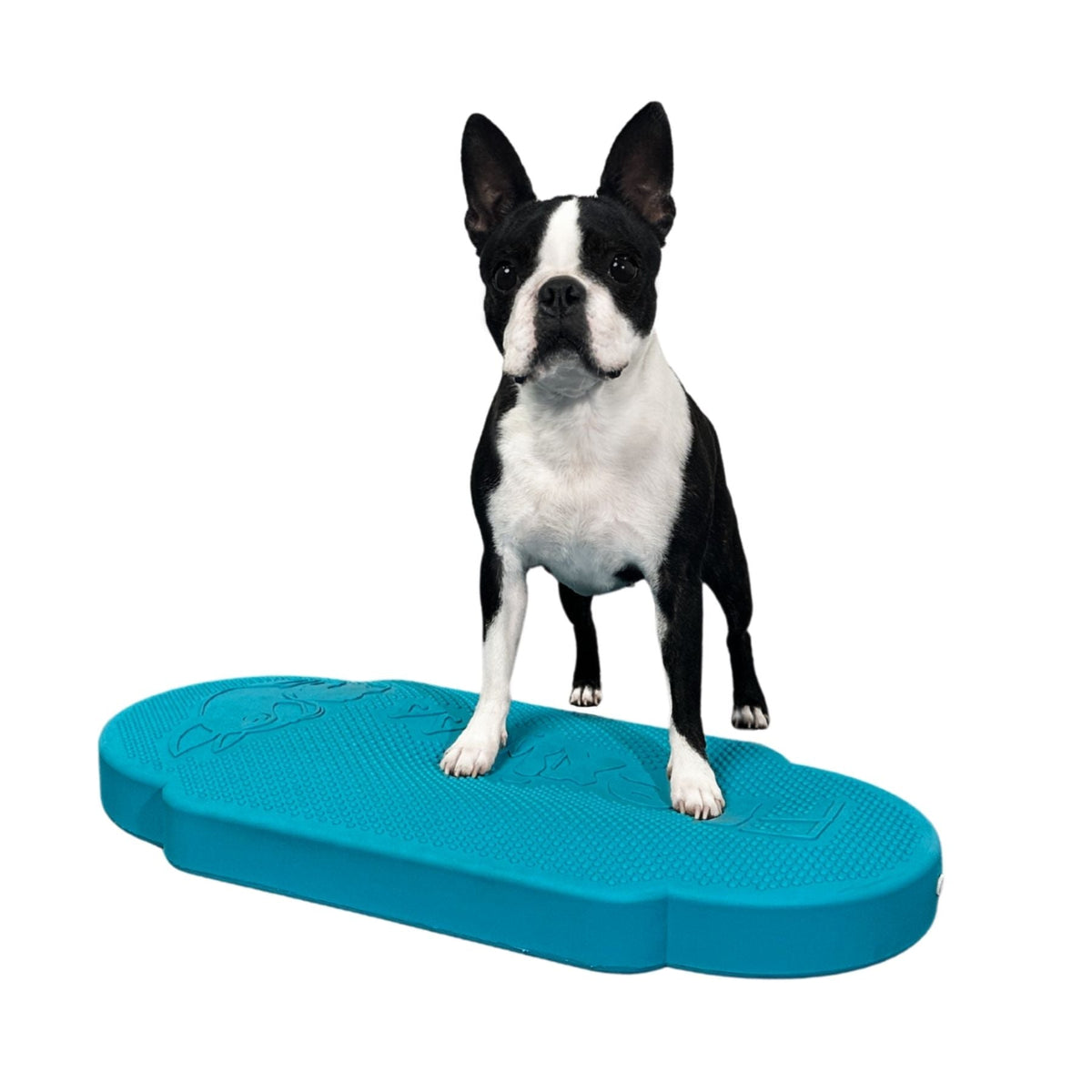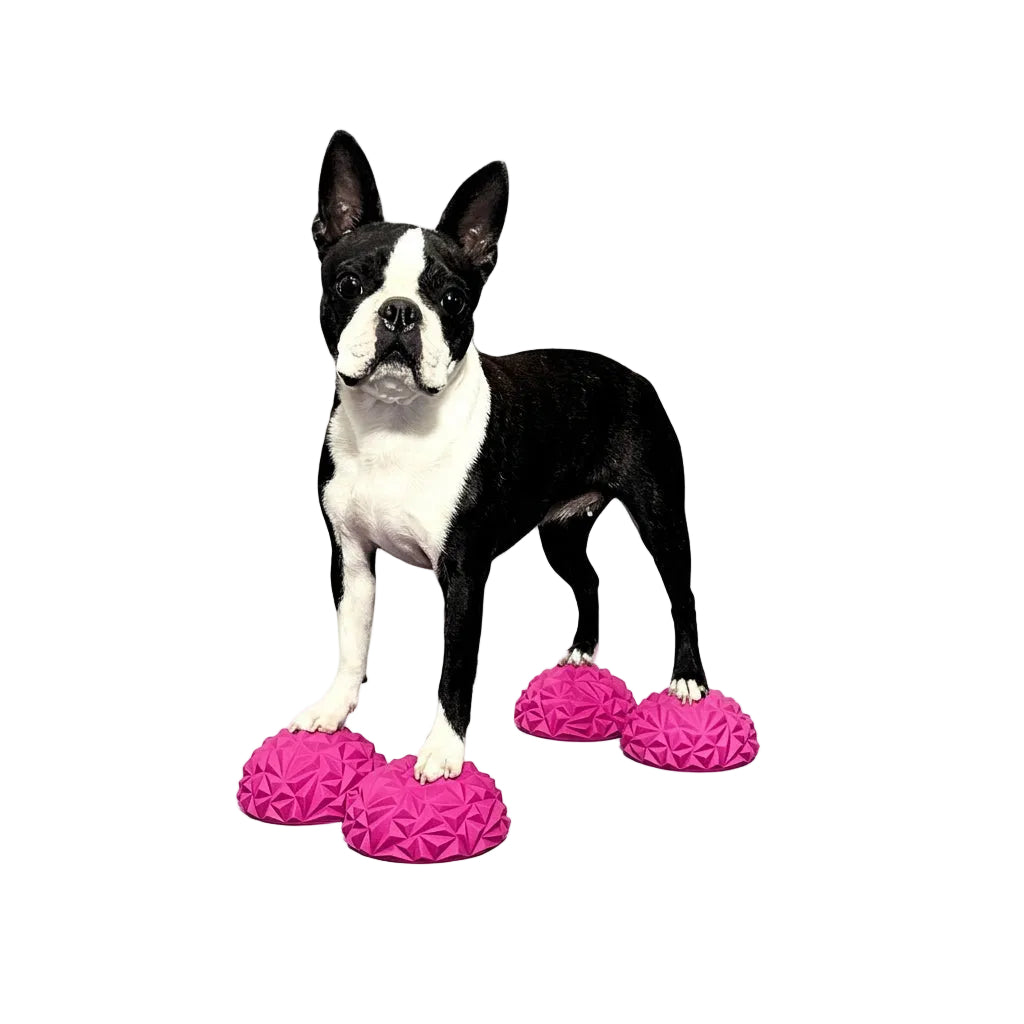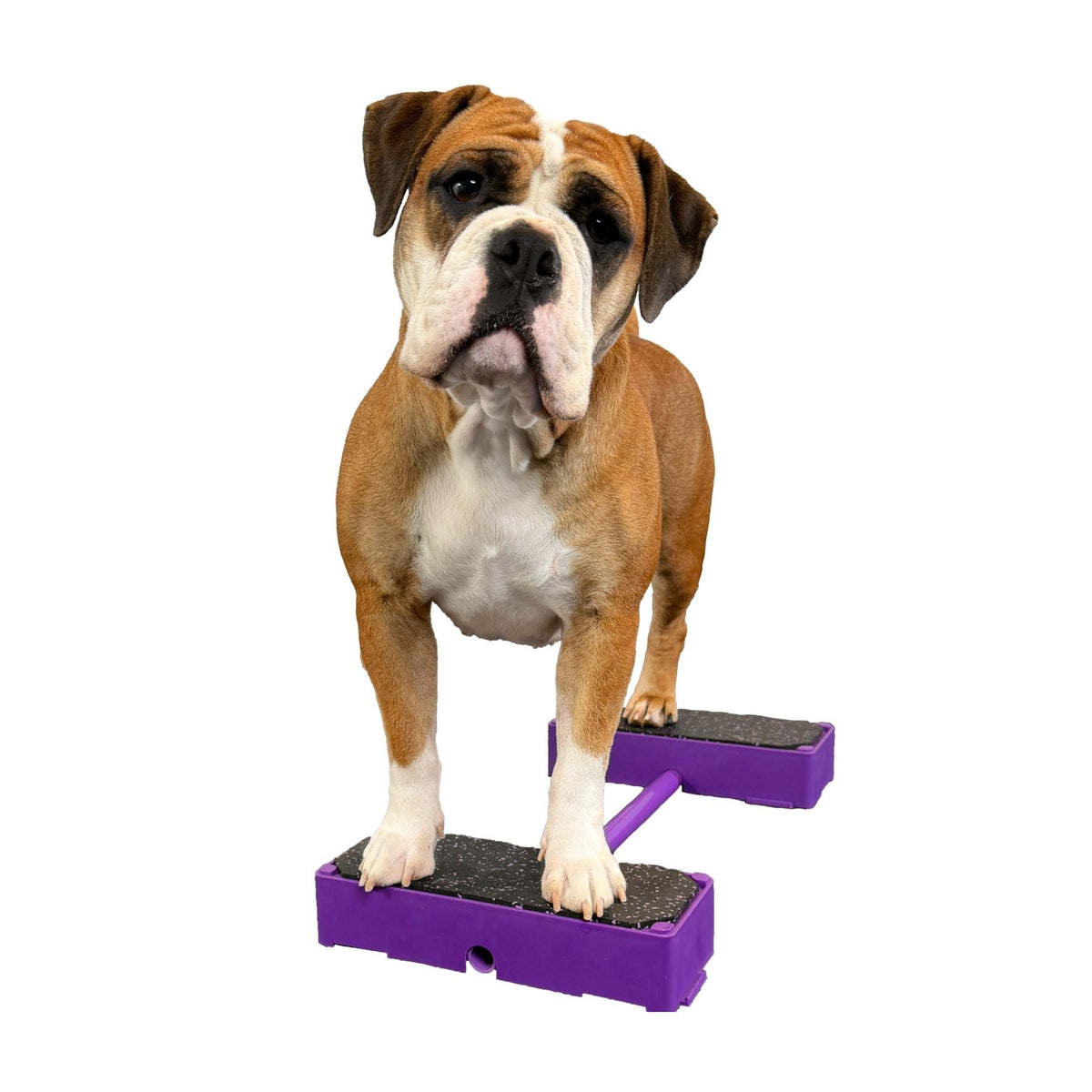
Heavy feels safe. A solid wooden platform that doesn’t move an inch looks professional, stable and trustworthy. That’s why many people assume the heavier the platform, the better the training.
We built FlexBlox the other way around, on purpose.
The assumption: heavier means safer
A platform has one job: to give your dog a defined surface to work on. Whether it does that job well isn’t decided by its weight. What matters is what happens when your dog interacts with it.
A heavy platform stays put no matter what. That sounds like an advantage, but it also means it tells you nothing. Your dog can step up carelessly, clip the edge, or place a paw half on and half off, and nothing happens. The platform covers the mistake.
What a light platform tells you
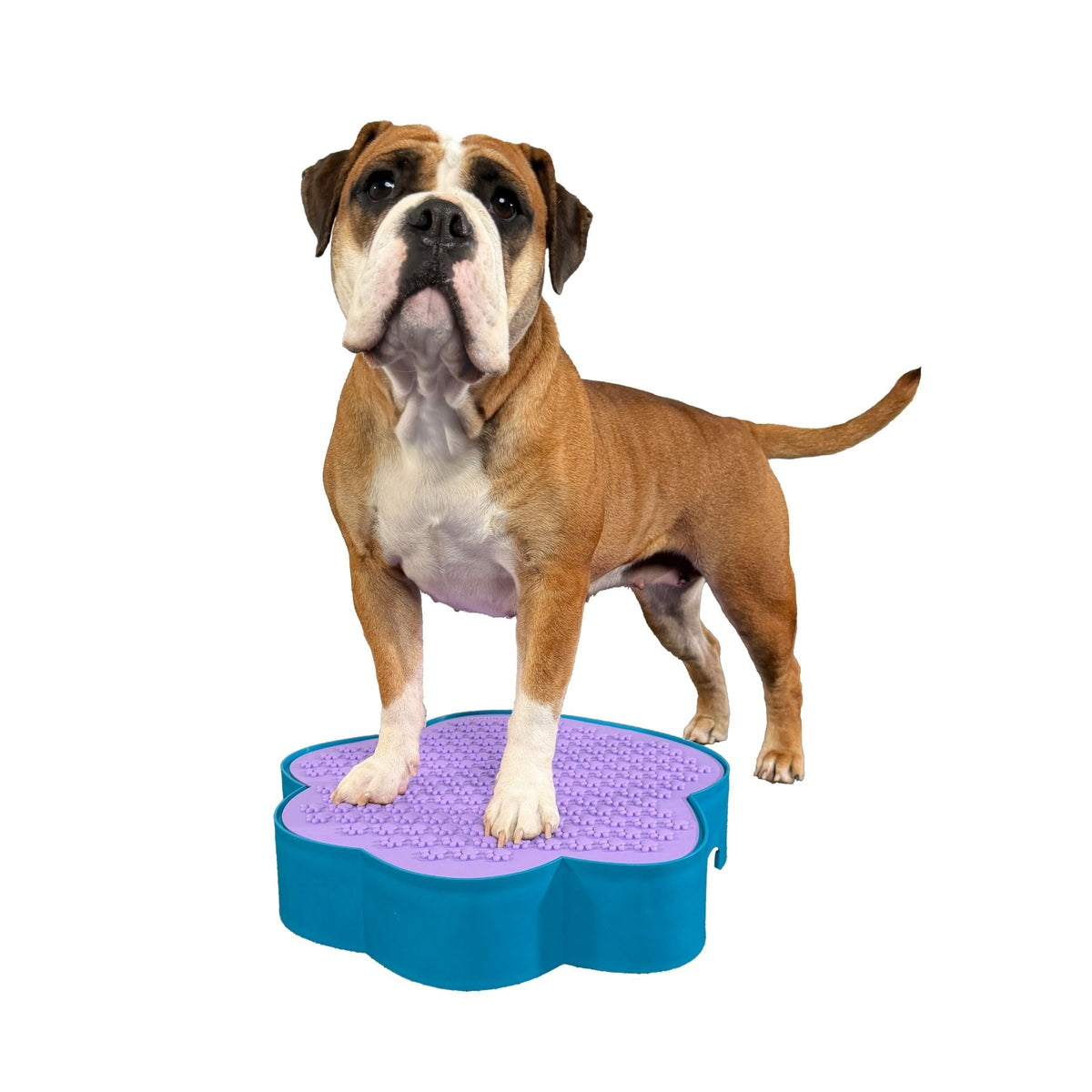
FlexBlox is deliberately light. When your dog stands on it, it stays where it is, because your dog’s own weight holds it in place. But if your dog doesn’t lift its leg high enough when stepping up and taps the edge, FlexBlox slightly moves.
That slight movement isn’t a flaw. It’s information.
And because FlexBlox has a low profile of around 6 cm and only moves slightly, your dog stays close to the ground. A misstep becomes feedback, not a fall.
“When I started designing FlexBlox, I didn’t want a platform that hides what’s going on. I wanted one that shows me. A platform that gives slightly under a dog’s push tells me a lot: about the dog’s impulse control, its ability, whether it has understood the task, and whether the setup is right for that dog.”
— Katharina Mattioli, Founder
What the slight movement reveals
When FlexBlox slightly moves, look at the moment just before it did:
- Foot placement: did your dog lift the leg high enough, or did it drag the paw?
- Body awareness: does your dog know where its hind legs are, or does it rely on its front end?
- Impulse control: did your dog rush the movement instead of placing each paw with intent?
- Understanding: does your dog know what you’re asking for, or is it guessing?
- Setup: is the height right for this dog, the distance, the angle?
Each of these is something you can work on. A platform that never moves would have let all of them slip past you.
When rigid is the right choice
Light isn’t the answer to everything. For plyometric work, where your dog jumps onto or off a surface with force, rigidity is the point. The surface has to absorb the load without moving.
For everything else, the foundations of posture, body awareness and controlled positions, a platform that gives feedback teaches more than one that stays silent.
Light is also practical
There’s a practical side too. FlexBlox are easy to carry, move and rearrange. Stack several, combine them with other elements of the system, and take them to class or out to the garden.
Training setups change constantly: a different height, a new angle, another exercise. Equipment that’s easy to adapt gets used. Equipment that’s a hassle to move ends up in the corner.
The bottom line
The weight of a platform isn’t a quality marker. What counts is whether it supports your training goal. For the foundations of canine fitness, that goal is control, and control is easiest to build with a tool that shows you where it’s missing.
Train smart with Flexiness®.